Charley’s Decks / Deck Advice / Local since 2006
Wood-free PVC.
A different kind of deck board.
AZEK Advanced PVC and Trex composite can both create beautiful outdoor spaces. The most important difference starts inside the board: AZEK Advanced PVC contains no wood fibers. Trex composite blends wood and plastic.
If you are comparing deck proposals in Medina, Brunswick, Wadsworth, Hinckley or Sharon Township, ask for more than a color name. Ask which material is actually being installed, which collection it comes from and how the complete deck will be built.
At Charley’s Decks, we often recommend TimberTech AZEK Advanced PVC for homeowners who want a premium, low-maintenance surface. Here is the material difference we want you to understand before choosing your deck.
TimberTech AZEK Advanced PVC
0% wood fibers.
Fully synthetic material in the core and cap. No wood flour or wood-fiber filler inside the board.
Trex composite decking
Wood + plastic.
A manufactured blend of reclaimed wood and plastic, with product-specific protective shell technology.
The scope of this comparison: this guide compares AZEK Advanced PVC with Trex wood-plastic composite decking. Trex also offers a separate PVC product, Refuge. Check the exact product line rather than assuming every board from either brand has the same construction.
What is AZEK Advanced PVC made from?
TimberTech describes Advanced PVC as fully synthetic decking, with no organic wood fibers in either the core or the cap. It uses polymers, including recycled polymers, rather than a wood-plastic core. That is what we mean when we call it a wood-free deck board.
This distinction applies to Advanced PVC. TimberTech also sells composite decking that includes wood fibers. “TimberTech,” “AZEK,” “PVC” and “composite” should not be treated as interchangeable specifications on an estimate. Ask the builder to identify the exact collection.
What is Trex composite made from?
Trex explains that its composite decking combines reclaimed wood with recycled plastic film. Its widely advertised recycled-content figure describes the combined recycled and reclaimed ingredients; it does not mean the board is 95% plastic.
Wood-plastic composite is an engineered product, not the same thing as an untreated wood board. Current Trex composite collections use protective-shell technology and have their own installation, care and warranty requirements. The fair comparison is between the specific products in your proposals.
AZEK PVC vs. Trex composite: a practical comparison
| What to compare | AZEK Advanced PVC | Trex composite |
|---|---|---|
| Core material | Fully synthetic polymers; no wood fibers. | A blend containing reclaimed wood and plastic. |
| Why we discuss moisture | No wood-fiber core; moisture resistance is a central reason we recommend it. | Evaluate the collection’s protective shell, approved use and installation instructions. |
| Routine upkeep | No recurring sanding, staining or sealing of the deck boards; cleaning is still required. | Low-maintenance boards with product-specific cleaning instructions; care still matters. |
| Heat in direct sun | Can get hot. Compare actual colors and collection-specific performance information. | Can get hot. Some collections include heat-mitigating technology; compare exact boards. |
| Appearance | Compare grain, color, board width, border and fascia details in physical samples. | Compare the exact collection and color in physical samples. |
| Installed price | Depends on the collection and the full project scope. | Depends on the collection and the full project scope. |
| Warranty | Read the applicable product, fade-and-stain and any labor terms separately. | Read the applicable collection’s coverage and exclusions; terms vary. |
Why wood-free matters in a Northeast Ohio backyard
Think about where your deck lives: rain, wet leaves, shaded areas, snow and changing seasons. A board’s material makeup deserves attention in that environment. Advanced PVC removes wood fibers from the decking itself, which is one reason it is our preferred starting point for many premium outdoor-living projects.
A good material choice still needs a good installation. Water must drain, gaps must suit the product, and the structure needs appropriate framing, flashing, support and connections. The “PVC” in a proposal describes the deck boards; the framing underneath may still be pressure-treated wood.
The question to ask your builder
“Is this board wood-plastic composite, or is it fully synthetic PVC—and which exact collection are you specifying?”
That one question makes proposals easier to compare and prevents a familiar brand name from standing in for a real specification.
Our approach: choose the whole outdoor space
The board matters, but so does how you will use the deck. We work through the seating area, grill location, stair width, railing sightlines and connection to the yard. Picture-frame borders, fascia and concealed fastening details should belong in that conversation too.
Want shade? Plan the covered-deck structure early. Want evenings outside? Consider deck and stair lighting with the layout. Need an open view? Compare the railing options before choosing the final palette.
We would rather help you understand these choices than ask you to pick a board from a tiny online swatch. Look at full-size samples outdoors, against your siding and trim, in both sun and shade.
Choosing deck colors that work with your home
Start with the parts of the house that will remain: siding, brick or stone, roof, exterior doors and window trim. Then select the decking, railing and fascia as a coordinated palette. View physical samples outdoors rather than making the entire decision from a screen.
Warm siding or brick
Compare warm brown and natural wood-look boards against the masonry and trim. A board that looks neutral by itself can show a different undertone beside your house. Keep a sample near the door and look at it at different times of day.
White or light-colored homes
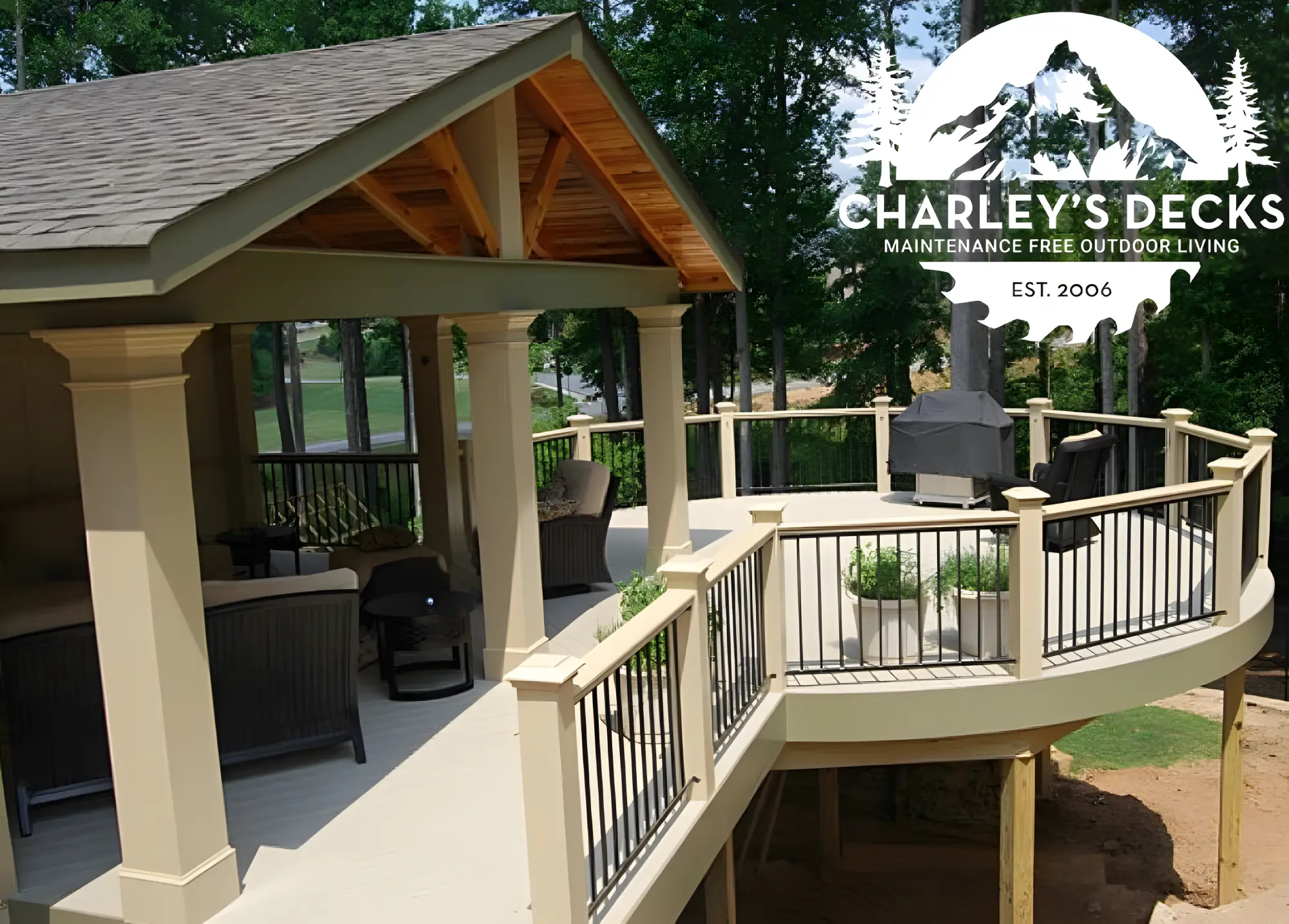
A warmer deck can bring contrast, while a neutral board can create a quieter transition into the yard. White posts with dark balusters are one combination visible in our covered AZEK deck in Medina. Choose the railing color with the views and sightlines in mind.
Gray siding and darker accents
Compare the undertone of your siding with each gray, brown and mixed-tone sample. A picture-frame border can define the deck edge; fascia can coordinate with the boards or nearby trim. Consider the complete palette before adding more contrasting colors.
Also consider sun exposure and cleaning instructions for the exact collection. Color is one design choice; material composition, stairs, railings and the structure still belong in the written scope.
Explore our homeowner reviews and Medina County deck cost guide, then bring your favorite samples and project photos to the estimate conversation.
Does AZEK cost more than Trex?
There is no reliable brand-only answer. Both product selection and the complete build affect the price. Comparing an entry-level composite option with a premium PVC collection is a different exercise from comparing two premium collections.
Ask for the same footprint, height, stair arrangement, railing scope, demolition, framing and site work in each proposal. Otherwise, a lower total may reflect a different deck rather than a better price for equivalent work. Our Medina County deck cost guide explains the scope questions to ask before comparing numbers.
Questions homeowners ask about AZEK and Trex
Does AZEK Advanced PVC contain wood?
No. TimberTech describes its Advanced PVC core and cap as fully synthetic, with no wood fibers. That is different from wood-plastic composite decking.
Is Trex composite all plastic?
No. Trex composite includes reclaimed wood and plastic. Trex’s separate Refuge product is PVC, which is why the exact product line matters.
Does “no wood” mean no cleaning?
No. Dirt, pollen, leaves and spills can collect on any outdoor surface. Follow the manufacturer’s instructions for the decking you choose. Our low-maintenance decking care guide explains the difference between reduced upkeep and zero upkeep.
Can either material get hot?
Yes. Color, sun exposure and the exact collection matter. Review product-specific information and test physical samples instead of relying on a broad claim that every PVC board is cooler than every composite board.
Which material does Charley’s Decks recommend?
We often recommend TimberTech AZEK Advanced PVC for premium new decks and complete replacements. We will explain the collection, design details and written scope for your home so you can make an informed decision.
Manufacturer references
Material descriptions checked October 23, 2026. Product lines and warranty terms can change; your proposal should identify the exact collection.
